
Why Butler Residents Are Choosing Implants Over Traditional Dentures in 2026
Everyone is reluctant to admit they are losing teeth, but it is quite common. Tooth loss can affect the way we eat and speak, as well as the way we feel about ourselves in social situations. For several years, conventional dentures were the most commonly prescribed solution, and although they offered a viable cosmetic alternative, they came with a variety of drawbacks that many people just put up with.
Nowadays, people have higher expectations. Patients want something that feels secure and stays fixed in their mouth all day and has long-term advantages to oral health. Consequently, many patients have had to think twice and ask better questions. This post explores reasons why dental implants have become such a popular choice for Butler residents.
Why Are People Moving Away from Traditional Dentures?
Conventional dentures are still an option; however, they do have drawbacks that are difficult to ignore:
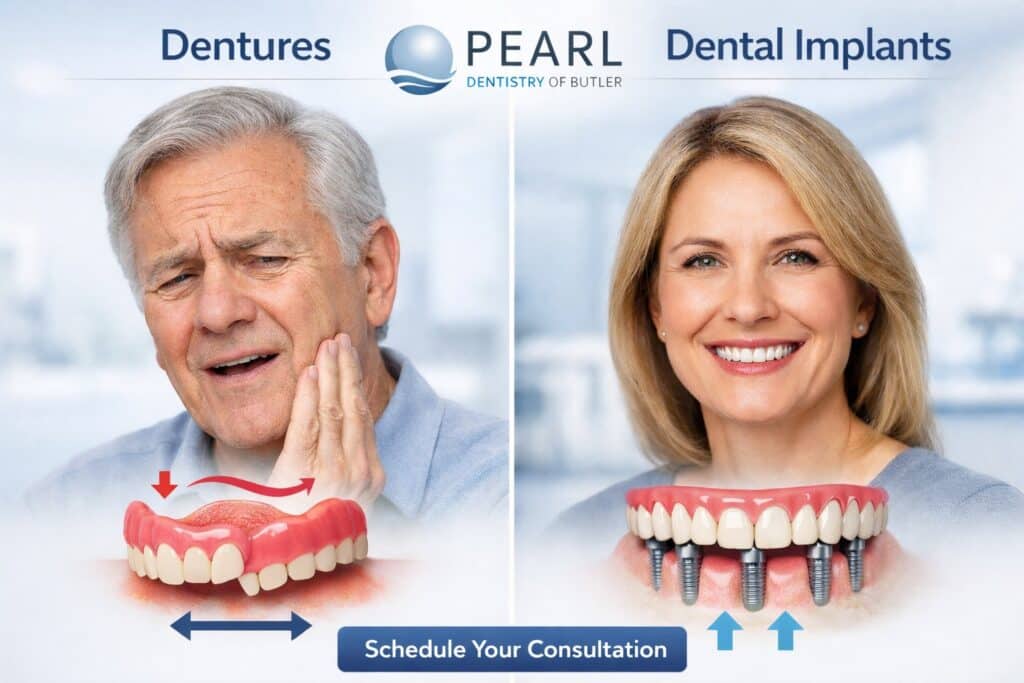
In due time, many patients have found they suffer from:
- A movement of the teeth while eating or speaking
- The inability to enjoy some food types due to this movement
- The dependence upon adhesives to hold them in position
- A change in fit due to the contraction of the jawbone
- Subsequent adjustments and replacement are required over time
Over a period of time, these factors can gradually erode a person’s confidence. It becomes quite tiresome to find simple, everyday occurrences, such as dining out, becoming more unpredictable.
What Makes Implants Different?
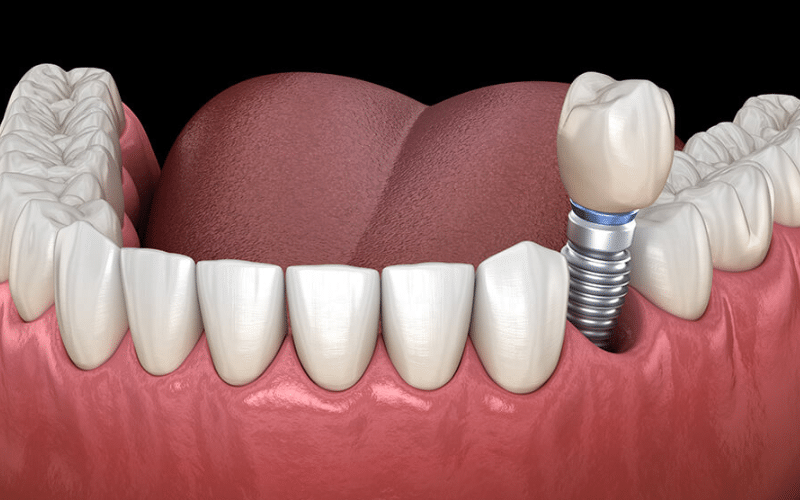
Dental implants essentially replace the tooth root and crown. This replaces the entire tooth structure as implants are inserted directly into the bone and are therefore the foundation of replacement teeth. Patients who are researching dental implants in Butler have found that this is far more beneficial and realistic when compared to artificial teeth, which sit on top of the bone structure. There is now a viable and better way for you to get your teeth fixed, because of the following:
- Fixed and secure placement of your new teeth.
- No movement during daily activities such as eating and speaking.
- Ability to eat a more varied diet.
- Support of the jawbone structure.
- A more natural feeling when conducting daily tasks.
How Do Implants Support Long-Term Oral Health?
One of the biggest differences between implants and dentures is what happens beneath the surface.
When a tooth is lost, the jawbone in that area begins to shrink due to a lack of stimulation. Dentures rest on the gums, so they do not prevent this process. Over time, this can lead to:
- Changes in facial shape.
- A sunken appearance around the mouth.
- A less stable fit for dentures.
Implants help address this issue by stimulating the bone, much like natural tooth roots do. This helps maintain structure and keeps the jaw more stable over time.
What Does Everyday Life Feel Like With Implants?
For many people, the biggest shift is not just clinical, it’s practical.
Think about daily moments:
- Enjoying a meal at a local spot after a Friday night game
- Speaking confidently during a work meeting
- Laughing without worrying about movement or discomfort
Implants allow for a level of predictability that dentures often cannot provide. You don’t need to remove them at night or rely on additional products to keep them secure.
This consistency makes a difference in how people approach their routines, whether they’re out at community events or simply spending time with family.
Are Implants Suitable for Everyone?
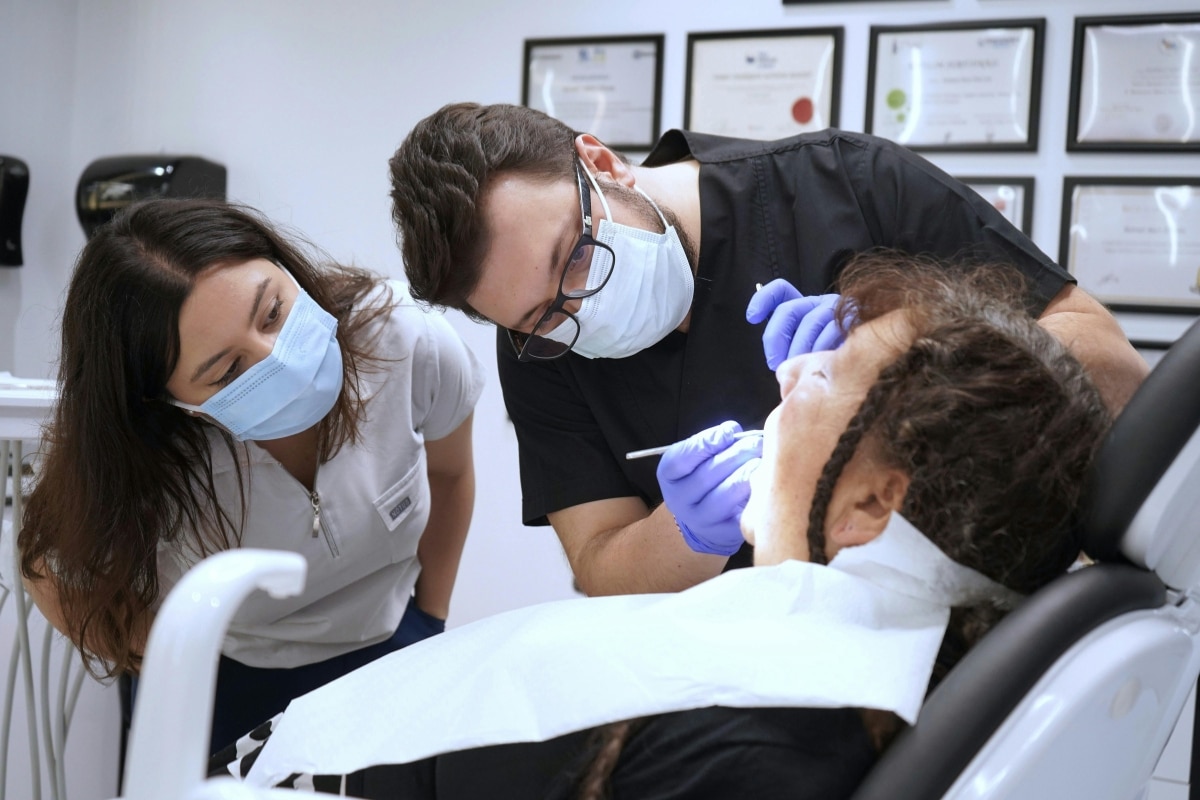
Not every case is identical, which is why evaluation matters. An implant dentist assesses several factors before recommending treatment.
These include:
- Overall oral health
- Bone density and structure
- Gum condition
- Medical history
In some cases, additional procedures may be needed to prepare the area. The goal is always to create a stable foundation that supports long-term results.
Dental Implants Process
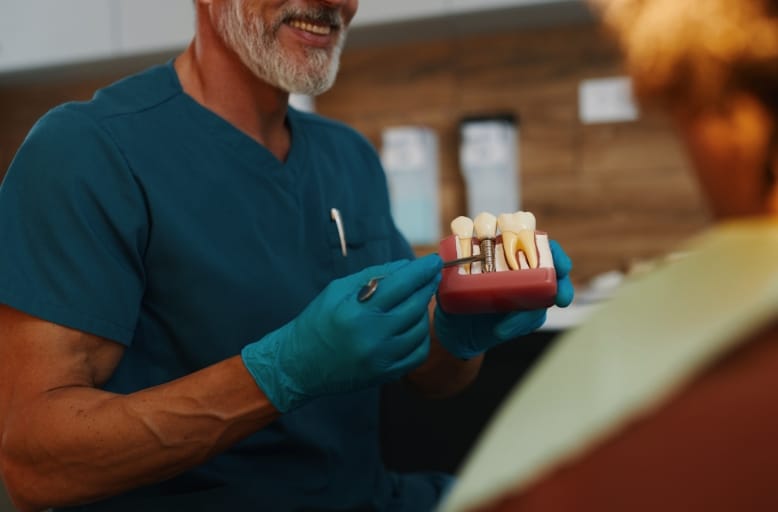
Understanding how the process works can make the decision feel more manageable. Each step is carefully planned to ensure stability, proper healing, and a result that functions naturally in daily life.
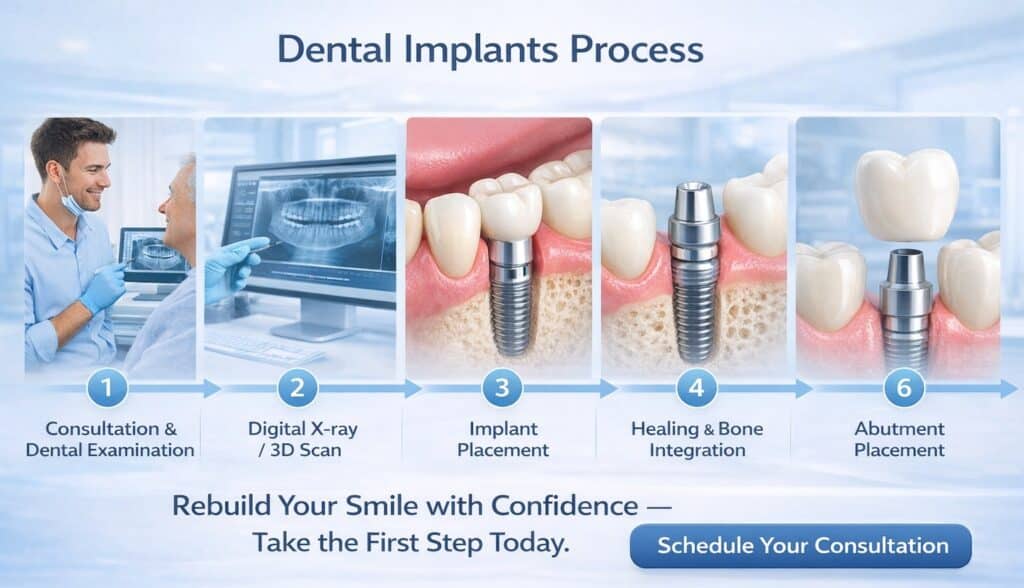
- Initial Consultation and Evaluation
The process begins with a detailed exam. Your implant dentist reviews your oral health, discusses your goals, and determines whether implants are the right fit. - Digital Imaging and Treatment Planning
Advanced imaging is used to map the structure of your jaw. This helps guide precise placement and creates a clear, customized treatment plan. - Implant Placement
A small titanium post is placed into the jawbone. This acts as the root of the new tooth and provides a strong, stable foundation. - Healing and Integration Phase
Over time, the implant naturally bonds with the bone. This step is essential for long-term stability and function. - Abutment Placement
Once healing is complete, a connector piece is attached to the implant. This allows the final restoration to be securely placed. - Final Restoration
A custom crown, bridge, or full arch restoration is attached. It is designed to match your natural teeth in shape and appearance.
Why Are People Switching to Implants Now?
Several factors are influencing this shift in 2026. Advancements in technology have made planning more precise and outcomes more predictable. At the same time, people are more informed than ever before. They are researching options, reading about long-term outcomes, and choosing solutions that align with their lifestyle.
There is also a growing focus on prevention and long-term stability. Instead of choosing a temporary fix, many individuals are prioritizing options that support their oral health for years to come.
How Does Choosing Implants Affect Confidence
Choosing dental implants not only impacts your smile but also has a profound effect on your overall confidence. With their natural look and feel, implants offer more than just functional benefits; they help restore your self-assurance in social and professional settings.
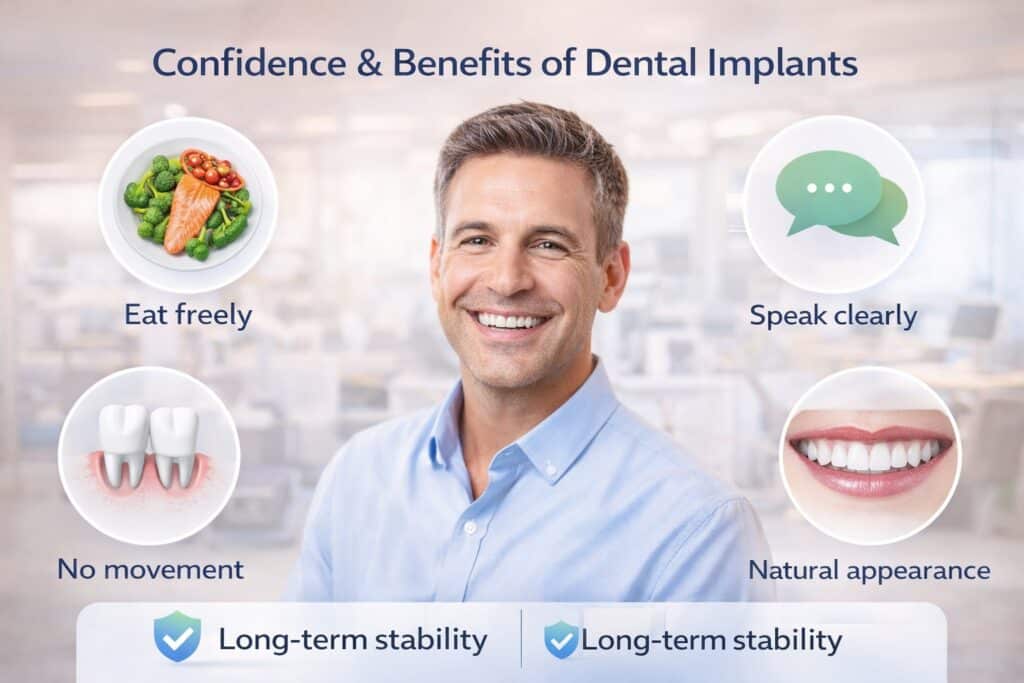
- Improved Appearance
Dental implants are designed to look and feel like natural teeth. This seamless integration helps enhance your smile, making you feel more confident when interacting with others. - No More Worries About Slipping or Shifting
Unlike dentures, implants are securely anchored in the jaw, so you can eat, speak, and laugh with confidence, without worrying about them moving or slipping. - Better Self-Image
Knowing that your teeth are stable and functional helps boost your self-esteem. You can smile without hesitation, which often leads to feeling more comfortable in both casual and professional interactions. - Natural Speech and Eating
Implants improve your ability to speak clearly and eat a wide variety of foods, which can positively influence your social interactions and make you feel more at ease in day-to-day life. - Long-Term Confidence
The stability and durability of implants provide a lasting solution, meaning you don’t have to worry about frequent replacements or adjustments. This long-term reliability translates to lasting peace of mind.
Ready for a More Stable Solution?
Choosing how to replace missing teeth is a personal decision. It involves understanding what works best for your lifestyle, your comfort, and your long-term oral health. Many people today are moving toward solutions that feel natural and dependable in everyday situations.
At Pearl Dentistry of Butler, care is centered on helping you make informed decisions with clarity. If you are considering implants, this is a good time to visit our dental office, ask questions, and understand what the process involves.
Questions People Ask About Dental Implants
How long do dental implants last compared to dentures?
Dental implants are designed to integrate with the jawbone, which helps them remain stable over time. With proper care, they can last for many years. Dentures may need adjustments or replacements as the shape of the gums and jaw changes.
Do implants feel different from natural teeth?
Most people report that implants feel very similar to natural teeth once healing is complete. Because they are anchored in the bone, they do not shift, which helps create a more natural sensation during eating and speaking.
Is the healing process after implant placement difficult?
Healing varies from person to person, but it generally involves a period where the implant integrates with the bone. During this time, mild discomfort may occur, but most people return to normal routines within a short period.
Can implants replace multiple missing teeth?
Yes, implants can support a single tooth, multiple teeth, or even a full arch. The approach depends on the number of missing teeth and the condition of the jawbone, allowing for flexible treatment planning.
Do implants require special care compared to dentures?
Implants are cared for much like natural teeth. Regular brushing, flossing, and routine checkups are important. Unlike dentures, they do not need to be removed or soaked, which simplifies daily maintenance.
What happens if I wait too long to replace missing teeth?
Delaying treatment can lead to bone loss and shifting of nearby teeth. This may affect bite alignment and facial structure. Early evaluation helps identify the best timing and options for restoring function and stability.